For Christmas this year, I wanted to do something special. I wanted to create a collection of family recipes that also included a little family history. I really didn't like the layouts I found online, and I wanted something more creative and fun. They looked too impersonal and too much like a church fund-raiser. I did find some nice templates for cookbooks with iBook Author that are ready to use. All you have to do is drop in photographs and videos and then copy and paste recipes. I liked the cover for one of the templates and decided to use it for this project. Since I did not have a lot of media to use in creating the cookbook, I used Book Creator on my iPad. In fact, this entire book was created using an iPad.
The first step in any project is to get organized. I used Evernote to keep the recipes and photographs I collected for the project. Every time my aunts or cousins contacted me with a new recipe to add, I immediately added it to Evernote so I didn't lose it. This also made it easier to copy and paste recipes into the book. When I added a photograph to Evernote, I noted who was in the photograph, where the photograph was taken, the date of the photograph, and who gave it to me. As a family historian, I understand that the more information included with an artifact, the better.
Since the late 1980s, I've been keeping records of my family history. I've recently digitized my collection and shared most of it online using FamilySearch.org. It's a free website that is a collaborative effort at documenting genealogy. I still maintain a paper archive of records, but I also keep a digital copy of everything in Evernote. Over the summer, I completed a two-year scanning project of family photographs. There were over 10,000 digital items scanned by the end of last summer. Of course, you do not have to go through this much trouble to put together a simple cookbook. Since I've been doing all of this research, I decided to share some of it in the cookbook.
There are no templates in Book Creator so you will be starting from scratch. The app is user-friendly and one that I frequently use for projects. You can add photographs, video, and recordings. When you finish a project, you can save it as an epub, pdf, or a video file. Before you begin, decide exactly how you want the book to look and what you want to include in the book. This will save you a lot of time. The elements I included in my book are:
Cover page
Title page
Copyright
Acknowledgments
Introduction
Family trees
Recipes
Project layout in Book Creator.
As I mentioned before, I used a cover photo I found in iBook Author as my cover for this project. I changed it to look the way that I wanted it to look. Then I made a screenshot of the cover page and added it to Book Creator. Adding a title page may seem redundant, but it is also a necessary one. A title page gives a clear copy of the title, author/editor, and publication.
The title page
My next pages are the copyright page and acknowledgments. Any work that you do, you should sign and date it and that's what I used the copyright page for. On this page, I included my name, the title, my self-publication identity (Farmhouse publishers) along with the location and date. On the following page, I wanted to give credit to the people who helped me with the project. I make it a rule to say thank you because not everyone is willing to help.
Copyright and Acknowledgment pages.
Every work needs to have a written statement of purpose. In my introduction, I stated the purpose of the book as well as how I gathered the recipes and the photographs. As a keepsake, it is important to document the how, why, and when. I wanted to be sure that years from now when my great, great-granddaughter picks up a copy of this book, she will be in no doubt of its intentions or its documentation.
The introduction.
The addition of the family trees in the cookbook was an attempt to connect the present with the past. It also identified the people who contributed recipes and how we are all related. One of the most confusing aspects about genealogy is when people write their family stories, they call their relatives "grandma" or "dad" or "mother" and I lose track as to who exactly they are talking about. I try to avoid doing this. It may seem strange to call my grandmother by her name, Willeen, but it will be clear to those who pick up my work as to who I am talking about. With this dilemma in mind, I made sure to add a family tree for easy reference. I used the family tree that is created on FamilySearch.org. There is a Portrait Pedigree Chart that can be downloaded for any ancestor. I used the charts for my paternal grandfather and my maternal grandmother.
Horne Family Tree
Spears Family Tree
The final section of the cookbook is the recipes. I decided on two layouts designs for the pages. I wanted to keep them simple without a lot of color to keep the price down when printing them out and sharing with relatives. The first layout includes the recipe and a photograph of the family.
The second layout design is the recipe with a profile photograph of the person who created the recipe.
You can organize your recipes in any way that you want. I only had a handful of recipes, so I dispersed them haphazardly throughout the book with no real organization in mind outside of aesthetics. When I finished the project, I saved the file as a .pdf - one "side by side pages" for viewing on a tablet and one file as "single pages" for printing. I also saved it as a video file to use for an advertisement video. The unedited video runs 4:44 minutes long and is incredibly boring when it is not edited.
You can find a free download of the cookbook on my website!
There are a few good ideas in this book worth noting, especially in regards to classroom management and being prepared for the classroom and teaching. On the whole, I am skeptical of some of the advice given and the last section (Section E) could be completely eliminated. I found Section E to be a little patronizing, especially the part where our culture is blamed as the reason why people are not successful. Wong spent much of the book criticizing inefficient teachers and makes a great case. So good, in fact, I wonder that inefficient teachers should be part of the problem as well. I also took offense to the idea that teachers are to preserve and restore the values of the nation (page 320). I did not go into teaching to brainwash students into falling into the nationalism trap. Teachers should focus on teaching students to think for themselves (which is repeated often throughout the book) and nationalism contradicts this notion.
The book comes with a disc that contains a video and a mp3 of a pep talk by Wong. I felt like I was listening to a used car salesman. There were times while reading the book that I felt as if it was more self-promoting than actually giving important information.
Although the book has its problems, I will refer back to it on occasion (classroom management is very helpful) and would most likely recommend the book to others with warnings about the ineffectiveness in some areas.
In Larry W. Hurtado's book Destroyer of the Gods: Early Christian Distinctiveness in the Roman World, early Christianity is shown as a very different kind of religion compared with the religious thought of the ancient Roman world. Hurtado, an Emeritus Professor at the School of Divinity at the University of Edinburgh, unfolds the little-known origins of Christianity in a thoughtful and thorough monograph. Throughout the book, he highlights the features of early Christianity that were different than those of ancient Romans, and how these differences became widespread assumptions about religion in general in the modern era.
In the preface and the introduction, the foundation of the study is laid by describing the Jesus-movement that emerged during the first three centuries CE. Despite the many differences that made Christians stand out among the ancient crowd, the religion spread throughout the Roman empire. The most dangerous difference was the refusal to serve the gods of the empire in preference to worshiping the one God, which was seen as offensive and irreligious by contemporary people of the day. The first chapter dealt with the hostility early Christians endured during the first centuries and the pagan criticism behind the persecutions, including Tacitus, Suetonius, Pliny the Younger, Galen, Marcus Aurelius, Lucian, and Celsus. The author made a very good point at highlighting the economic factors presented by the early Christians who urged others to stop sacrificing and worshipping other gods, which impacted the livelihood of craftsmen and those who raised the animals for sacrifice.
In chapter two, Hurtado explains in depth the differences in what modern people would consider "religion" and its connection to this time period. For the Roman people, religious responsibility was a public service that included reverence and respect to the various gods of the empire, the town, and the family. Even the Roman people's sense of piety and virtue, their idea of prayer, and observances to the gods contrasted with the early Christians, enforcing their outsider status. In chapter three, the idea of religious identity is explored. In the Roman world, one's religious preference was conferred at birth and everyone was presumed to honor the gods as appropriate to their Roman culture and heritage. The Romans enthusiastically embraced the religious cults of other cultures, including Persia and Egypt because they were similar to their own religious beliefs. The problem the Romans had with the Christian religion is that Christians were expected to reject other gods and religious services, which was seen as abhorrent and atheistic.
Chapter three reveals one of the issues that enabled Christianity to persist into the following generations. Christians were prolific in their writing and sharing of their sacred texts. These texts became important and were incorporated into their worship, which was different compared to other religious groups of the day who did not have sacred writings of this nature and used scrolls instead of books to archive and share with others. In Chapter four, the setting of the Roman era is explored. The violent contests, infant exposures, and sexual escapades were acceptable in Roman culture but contrasted greatly with Christian practices of moral behavior.
Destroyer of the Gods is a readable and inspiring discussion about the beginning of Christianity and how it differed from any religious thought before (except for Judaism). The vocabulary and organization created a monograph easy to follow no matter how much knowledge you have about the topic. Hurtado beautifully reveals how these differences subtly become the norm in modern culture and how its roots were formed and flourished against all the odds. As a whole, the text makes a considerable contribution to the understanding of the ancient period between the first and third centuries and delves into a forest of information with an eye for detail and thoughtful interpretation.
Today we celebrate Poem in Your Pocket Day, a day when you carry a poem in your pocket and share it with friends, family, strangers, whoever you can find to stand still and listen to your poem. Fortunately, I work at a public residential high school, so I have a captive audience. As a poet and lover of poetry, this is one of my favorite days!
So, what is in my pocket today? Today, I am carrying "Masquerade." Here is a video commemorating the poem:
Last spring break (March 2015), I had the opportunity to travel to Ireland, Wales, and England as a group leader to six teenagers. It was a unique and rewarding experience and one I won't soon forget. When we returned, I spent the next few months working on a digital scrapbook commemorating the trip.
I used Book Creator for iPad, which is one of my favorite apps for creating books outside of iBook Author. In my opinion, the $4.99 price tag for Book Creator is money well spent. I find that I turn to it for projects I want to quickly put together. The app allows you to add audio and video to your book and has a feature that turns your book into a video.
In Ireland, Wales, and England, I documented the daily activities on the tour as well as the sites we visited to create a visual narrative that includes pictures, videos, and short descriptions. The first video (playlist) was created using an iMovie trailer theme:
A few of the videos were created using a variety of video editing apps, including Drop 'N' Roll, Replay, Vont, and Fliptastic. Photographs were edited using the Martha Stewart Craft Studio and Photo Tangler. At some of the sites we visited, I was quite the shutterbug and took an absurd amount of pictures. Instead of having page after page of boring pictures, I turned them into a short video. Here is an example from my visit to the Archaeology and History Museum in Dublin, Ireland:
Mixed with the photographs are screen shots of some of my social media posts from the trip. Modern technology allows for easy communication with people back home. The first time I traveled outside of the country, the Internet was a new thing and mass emails was the easiest way to stay connected. Today with Facebook, Twitter, and Instagram, staying connected is in real time. I can check-in at Buckingham Palace in London and friends and family back home (if they're awake) know immediately. It was fun to include the posts in the photographic narrative:
Once I had all of the pictures and photographs in place, I was ready to turn the scrapbook into a video. To create a video, click on the share icon and then on "Export as Video," which will save the video to your camera roll.
When the video is uploaded to the camera roll, I then opened it in iMovie and did some more editing to it. One of the main bits of editing I did was to add audio to dull areas in the video. These were mainly the portions of the video that showed photographs lying flat on a page. A great source for free music that can be shared in videos for free can be found at the YouTube Audio Library. They have a variety of different music that can be searched by mood, genre, length, etc. It is a great source if you're on a budget. The video also plays the short videos that were added to the book, but they were small on the screen. In a book, this would not be a problem because a video can easily go to full screen. In the video, however, it was just too small. I simply deleted the sections showing the short videos and inserted the original footage into the timeline, using transitions as a clean segway in between scenes.
I'm still using DVDs for movies so, of course, I had to burn a copy to a DVD and make a matching cover. To burn to a DVD, I used DVD Creator Pro Burn Video ($14.99) for Mac, which is a simple and intuitive software that lets you add background pictures as well as audio. To create the cover and the sticker for the DVD I used Pages.
Book download
When I began this project, I had no intentions of turning the scrapbook into an .epub that can be viewed on my iPad, but I have changed my mind. Had I originally intended to create an electronic book, I would have created it using iBook Author instead because of the massive size of the files. With iBook Author, you can decrease the size of your book by using the YouTube widget instead of uploading individual videos. On the Book Creator app, the size of my final book is 2530 MB. Crazy, huh? Perhaps one day soon some genius will figure out how to have a media rich book without ending up with an incredibly large file. Until then, I will have to make due with many volumes to the work.
To download a copy of the scrapbook, click on the link to the volume you wish to see. If you are using your iPad, simply click on the "Open in" tab and open the document in iBooks or your favorite .epub reader. If you are on your Mac, click to download the file and save it to your computer. Then click on the file and it will open automatically in iBooks.
Please note: these files cannot be read on a Kindle. You must either have iBooks or an .epub reader to view.
Vol. 1: The introduction and first two days in Ireland, including a visit to Adare and Killarney.
Vol. 2: Finishes the second day in Ireland and continues into the third day, which includes a tour of the town of Killarney and the beginning of the Ring of Kerry with a stop to see the Atlantic Ocean at Dimple Peninsula.
Vol. 3: Continues along the Ring of Kerry, highlighting the sheepdog demonstration and a stop at Sneem.
Vol. 4: Continues along the Ring of Kerry with stops at the Kerry Bog Village and the Ladies' View.
Vol. 5: Begins day four at Blarney Castle, Cashel Rock, and Dublin.
Vol. 6: Begins day five with a look at St. Patrick's Cathedral (a short book with only 15 pages because of the size of the video of St. Patrick's).
Vol. 7: Finishes day five with an exploration of Dublin, including Trinity College. Day six begins with a ferry ride across the Irish Sea to Wales and the beautiful Beaumaris Castle.
Vol. 8: Begins day seven at Stratford-Upon-Avon (a short book with only 13 pages because of the size of the video of Stratford-Upon-Avon).
Vol. 9: Continues day seven with a stop at Oxford before continuing on to London (another short book with only 11 pages because of the size of the video).
Vol. 10: Finishes day seven in London (small book with 11 pages because of the size of the video).
Vol. 11: The final volume covering day eight with more sites of London (one video removed because it was too long to allow the file to upload from Book Creator). This volume includes Buckingham Palace, a stop in Windsor, and a concluding video.
I hope these volumes leave you inspired and ready to create your own digital scrapbook!
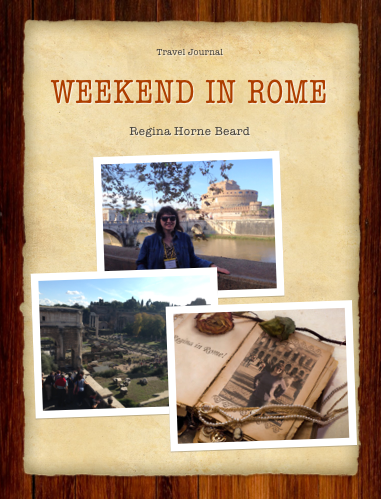
A few months before going to Ireland, Wales, and England, I went to Rome. When I returned, I created a digital scrapbook using iBook Author on my Mac. To check out step-by-step how I created Weekend in Rome, click on this link.
Another way to commemorate a trip or event is to make a memory quilt. You can check out mine at I Tried That Crafter blog.
The Crystal Cave by Mary Stewart is a narrative focused on Merlin of the King Arthur legend. Stewart delves into the beginning of Merlin's life and follows it to the conception of Arthur. Stewart magically weaves myth and legend into an enchanting story. Merlin's life begins in Wales as a bastard who does not know his father and his mother is the daughter of the king of Wales. His upbringing is as expected for someone who does not know his father and his escape launch Merlin on a path towards his destiny as a well-known wizard. The story is rather slow up to this point, but once Merlin and his father, Ambrosius, return to England, the story begins to soar.
If you enjoy reading stories about King Arthur, this is a nice gem to find. Although the story is not the most extraordinary telling of the legend, it is a good read, especially for younger readers mature enough for dark tales.
Once Upon a Time: a Short History of Fairy Tale by Marina Warner is a great introduction to the history of fairy tales. Warner's expertise in the subject is brilliantly laid out in this well-written prose. Warner's wit, readability, and writing style combined with her professional knowledge made Once Upon a Time an enjoyable and thrilling read.
Beginning with the prologue, she gives a brief description of the genre and its characteristics and continues to elaborate on these characteristics in the following chapters. She explores the world of fairies and the cultures that passed these oral stories to the following generations who collect them and write them down. Warner describes with clarity how these stories influenced society and how each generation cultivates them to reflect their beliefs and fears. The discussion of whether these stories were traveling tales or a collective unconscious (chapter three) was the most interesting in my point of view. With oral histories, the difficulty is understanding the origins and the original intent of these stories, and Warner lays out the arguments for all sides beautifully. Another interesting discussion about the history of fairy tales can be found in chapter seven where Warner analyzes the feminist approach to fairy tales and how they are reinvented to be more modern and acceptable to today's audience.
As a whole Once Upon a Time lives up to expectations as a short and concise study of the subject of fairy tales. It may not be groundbreaking, but it is a great start for anyone interested in fairy tales. If you are an avid reader of fairy tales, this book will enhance your understanding and appreciation of the genre.
As far as historical fiction goes, Rival to the Queen by the renowned historian Carolly Erickson is a great escape for those in love with Tudor England. Granted, the facts have been changed (some drastically!), but Rival to the Queen is a quick and easy read that can fill the void of an idle afternoon with a lazy cat and a cup of tea.
Rival to the Queen opens with Lettice Knollys at the age of 16 with her family witnessing a traumatic execution of a family friend and tutor, Jocelyn Palmer, who incurred the wrath of Catholic queen, Mary Tudor. As the story progresses, Erickson compares the struggle of Lettice's Protestant family - even among fellow Protestants who persecute other Christians who do not subscribe to their specific and narrow beliefs, an excellent demonstration of the religious wrongs that played out during the Tudor dynasty. Fortunately for the Knollys family, when they run into trouble with their Lutheran friends and neighbors in Frankfurt, Germany, they are forced to return to England where Mary Tudor had conveniently died, clearing the way for the Protestant queen Elizabeth I to take the throne.
The story then leaves off the religious tension of the Tudor period and picks up with the rivalry between Elizabeth I and her cousin, Lettice. Elizabeth is described as a cunning, self-absorbed tyrant prone to having jealous fits. The examples of Elizabeth's character are at length and questionable. Although there are no doubts that Queen Elizabeth was such a tyrant, I somehow doubt that her reign was so focused on immature vengeance simply because a lady was prettier and receiving more attention. Lettice, in contrast, seems more mature at times and more royal than the queen, especially during the period when the queen and her cousin had fallen out over the love of the rogue Robert Dudley.
Since Rival to the Queen is fiction, Erickson takes liberties with the facts, much of which are minor details easily overlooked within this semi-romantic tale. If you love historical fiction and do not upset easily over inaccuracies, then this book is for you. If inaccuracies bother you as a reader, then step away from Rival to the Queen!
Sapiens: A Brief History of Humankind by Yuval Noah Harari is not at all what I was expecting. Instead of an analysis or description of early Homo sapiens and an explanation of recent DNA findings, Harari focuses on a brief (under 400 pages) historical overview of human history. The first few chapters are interesting and discuss the early ancestors of humans with little evidence to back up Harari's conclusions, which is excusable since there is not much concrete information available; however, Harari continues with this approach throughout the entire book, even in sections where there is information available - much of which would contradict his findings and is probably the reason he did not bother with actual facts. Perhaps this was on purpose since Sapiens is intended for a general audience. Whatever the case, such generalizations rob the reader of an accurate representation of the historical periods and to those who lived through them. What is contained within the pages of Sapiens is not the whole story and should not be confused as such.
Yuval Noah Harari, a lecturer who earned a Ph.D. in history from Oxford, does not have a clear understanding of how to write a scholarly book. There is no clear focus and each chapter is full of commentary and ideological statements that cannot be backed up with evidence. This problem could be because Sapiens does not contain a thesis. The reader has no idea why the book has been written until they read the last chapter, where cyborgs and artificial life is briefly commented on with philosophical overtones.
Surprisingly, Harari does not seem to understand that history itself does not cause or allow for things to happen. Neither can the Agriculture Revolution or any other philosophy or idea. Sapiens is full of phrases like "The Agricultural Revolution enlarged the sum total of food at the disposal of humankind..." (79) and "Culture tends to argue.." (147), which any scholar, especially a historian, knows is not correct. It should be "the people of the Agricultural Revolution..." or "the [evidence] shows that their culture is...". The Agricultural Revolution can do nothing and culture cannot argue. These flaws in writing could easily be dismissed if the book was not full of such phrases.
I would not recommend this book to anyone with a serious curiosity about history and early humans, and I'm quite perplexed as to why Sapiens made the New York Times' list and has received so many stellar reviews. The book should be placed on the fiction shelf.
Beginning with the birth of Moses to the construction of the Tabernacle, Nahum M. Sarna gives a convincing literary interpretation of Exodus in Exploring Exodus. Sarna, a Professor of Biblical Studies at Brandeis University, gives a full account of the events found in the Book of Exodus and compares the culture and literature with those found in ancient Canaan and Egypt, which adds greatly to the understanding of the philosophy and religion that is developed by Moses and the Israelites.
Much of what Sarna has interpreted about the Book of Exodus is sound with convincing evidence to back up his statements; however, his assumptions about the timeline of events occurring during the Hyksos rule over Egypt was not convincing. Sarna mistakenly assumes that the event of the Exodus happened during the reign of Ramses II because of the listing of the cities of Pi-Ramses and Pithom being built by the Israelites, which is obviously anachronistic. Plus, Sarna's exposition about dating the events of the Exodus based on the genealogical record did not add up, especially when he does not include that some of the ancestors of the Israelites were not born in Egypt but in Canaan. For example, Judah's children were born before the famine, placing at least two generations in Egypt; another example is that Moses' mother is much older than his father who was actually her nephew - with these considerations, it is conceivable that four generations of Israelites lived in Egypt before the Exodus event.
Another troubling issue is the lack of historical record and archaeological data that could be used to better hone his arguments. For example, Sarna states that state slavery was forced upon the male population, which is not true because there are Egyptian documents containing lists of the names of slaves in which women were among the names.
Outside of the above issues, Sarna brings to light the meaning behind the place names and the people for a more in-depth interpretation. In fact, his interpretation of the Burning Bush and why it was a sacred place is pure genius, and the discussion about the name of God gave me much to ponder about. The comparison of the plague account with the story of Creation is another example of why Exploring Exodus is a treasure. The explanation of the evolution of the Hebrew calendar is of great value as is the interpretation of the creation of the Tabernacle and its sacred object. Exploring Exodus is a literary interpretation that should be on the bookshelf of any serious biblical scholar interested in unraveling the philosophy and literary background of the Book of Exodus.
A Month in the Country by J.L. Carson is not only a satire about manners and customs, but it is also prose verging on poetry. Set in the English countryside during the early twentieth century, Tom Birkin, a veteran of the Great War, leaves behind his hectic and broken life in the city of London and begins work revealing a medieval masterpiece hidden behind whitewash in an unassuming country parish. Birkin lives a Spartan existence while he resides in Oxgodby, and he becomes acquainted with a small circle of residents - each with quirks vaguely hidden behind appropriate yet absurd manners. As he reveals a painting based on the Last Judgment, Birkin evolves from an anxious man scarred by the war and an unhappy marriage to a man at peace with himself. As a survivor of the war, his experiences mirrored the hell he discovers in the painting. When his work is complete, the beauty of the masterpiece arises a cathartic peace that manifests itself physically when his facial tick ceases to contort his face. Birkin is not a religious man, but he sees how life continues to march forward despite the ugliness and the expectations of society. In every instance of death mentioned in the story, there is a common theme of the continuation of life. For example, the original medieval painter did not complete his masterpiece but fell from the scaffold to his death and yet the painting was completed. Another example are the soldiers who perished in the Great War and yet Birkin survived when so many others did not. When Birkin arrived at Oxgodby, he concludes that life is made up of small meaningless moments impacted by events out of our control:
"As far as I'm concerned he might just as well have gone round the corner and died. But that goes for most of us, doesn't it? We look blankly at each other. Here I am, here you are. What are we doing here? What do you suppose it's all about? Let's dream on.... I go to work at eight and come home at five-thirty.... Now you know all about me. Go away: I've forgotten you already.”
By the time Birkin leaves Oxgodby, he is more optimistic about life:
"If I'd stayed there, would I always have been happy? No, I suppose not. People move away, grow older, die, and the bright belief that there will be another marvelous thing around each corner fades. It is now or never; we must snatch at happiness as it flies."
Pharaohs and Kings by David M. Rohl exposes the need for a re-evaluation of Egyptian chronology. Since the beginning of the science called Egyptology, sequential dating of the pharaohs has been problematic and shortsighted. The very idea that scholars in this field of study have never questioned the official historical timeline is disconcerting and unscholarly. I commend Rohl for picking up a conversation that is rarely discussed among Egyptologists. In his book, Pharaohs and Kings, Rohl uses archaeology to unravel the chaos of the official timeline, creating a “New Chronology” that is just as relevant as any other timeline offered over the previous century.
Rohl’s thesis,
“The objective of this book is to argue straightforwardly that the narratives contained in the Old Testament are consistent with the general cultural setting revealed through Egyptian and Levantine archaeology - once the correct chronology is applied” (page 38), is a hefty objective, but he convincingly demonstrates evidence along with well-reasoned speculation to prove his thesis. Granted, the speculative portions of Pharaohs and Kings are hard to accept but, with luck, perhaps even the speculations will reveal the historicity of his claims in due time.
Of course, there are some problems that are either unclear or should be reconsidered and re-interpreted. First, Rohl’s interpretation of the mass graves found at Tell ed-Daba at stratum G/1 is puzzling. He associates the mass grave as evidence of the last plague on Egypt, the death of the firstborn sons. If the site of Tell ed-Daba is where the Israelites settled while in Egypt, then one would think that you would not find graves like this. According to Exodus 11, the Israelites were spared from the horrors of the plagues on Egypt, so there should not be any mass graves discovered there if these are indeed the same Israelites of the Exodus. Also, I was not convinced by his evidence of interpreting the names of people in the Bible with corresponding names found in Assyria, Palestine, and Egypt. The premise it that the name meanings are the same so they must be the same person. This argument is compelling, but more investigating should be done to solidify the theory.
Much of Rohl’s interpretation of the biblical narratives are impressive for a scholar who claims to not be a Christian; although, I do take issue with a couple of statements made, especially about the age of the Patriarchs. There is no evidence to suggest that Moses was not 80 years old when he led the Israelites out of Egypt. Rohl’s flippant opinions about the years mentioned in the Bible are concerning. There is no evidence to suggest that the information is wrong (except the point about how long the Israelites were in Egypt) simply because it is a “round” number. There is a lot of symbolism that takes place when discussing numbers in the biblical narratives but, at the same time, they are not rounded numbers either. Also, on page 321, Rohl says that Jacob is Abraham’s son, which is incorrect. Isaac was Abraham's son; Jacob is Isaac’s twin son (Esau being the other twin). When dealing with genealogy, attention to details such as this is crucial, especially when laying out a controversial thesis. If Rohl is wrong on simple biblical genealogy, is he also wrong about the Egyptian genealogy? Also, if you are wrong on the minute information, then you could be wrong about the big picture.
Wizard’s First Rule by Terry Goodkind is a hero’s quest in a game of good versus evil. Richard Cypher must save the world by keeping a magical box against the evil Darken Rahl. To help him with the quest is a wizard, Zedd, and a Confessor, Kahlan. Through a series of adventures and missteps, they work to put an end to Darken Rahl’s plans.
The characters in the story were fascinating and mostly realistic. My favorite character is Zedd the wizard. At times I had wondered if Zedd is based on someone Goodkind knows in real life, which could probably be said of most of the male characters in the story. The female characters seemed two-dimensional at times and could use a little more depth.
The story is written with special attention to detail. There were times when the details are so realistic that I could not read the scene and found myself skipping pages. For example, when Darken Rahl killed a boy in order to enter the Underworld, the details were incredibly graphic and was not at all enjoyable. I really did not need the scene played out in my head in order to understand that Rahl killed the boy in a ritual. Another excruciatingly graphic scene is when Richard is being tortured. The torture literally continues for several chapters. I thought I was going to have nightmares. Again, it was unnecessary to show me so much detail about the torture. This is one of those rare occasions when it’s okay to tell and not show. Nothing would have been taken away from the story if I was told the torture went on for so long without having to be there with the character while it was happening.
I would recommend this novel to any reader who enjoys fantasy and stories where the villains are truly evil and the heroes are exceptionally good with a warning about the intensity of the detail given during the story.
Introducing the Ancient Greeks: From Bronze Age Seafarers to Navigators of the Western Mind by Edith Hall is an exceptional review of the impact of the ancient Greeks and clearly describes how these innovators gained their knowledge and scattered their culture abroad to what ultimately becomes known as the Roman Empire. Hall uses ten characteristics unique to the ancient Greeks and how each of these characteristics manifest themselves, especially in literature and archaeology. Hall begins the tale with the Mycenaeans who inhabited the island of Crete during the late Bronze Age and continues the narrative through the colonization of Asia Minor, the Persian Wars, the Peloponnesian War, and the conquests of Macedonian and Rome. With each time period, she brilliantly connects the characteristics and shows how they evolve and developed over the centuries. The evidence does become rather slim after the conquests of Macedonia under Alexander the Great - almost as if the characteristics become diluted, as if the characteristics became a shadowy reflection of what the ancient Greeks ultimately become.
The most interesting aspects of Introducing the Ancient Greeks were the archaeology commentary. The ancient Greeks left a wealth of information in their pottery, palaces, and temples, giving scholars the foundation in which to understand how the ancient Greeks lived, which only highlighted the evidence of Hall’s thesis that many of the skills and ideas commonly associated with the ancient Greeks have roots in cultures that predate them.
My only complaint about the book is that there is no new information or new theory being presented. It is an ideal book for anyone who is new to the study of the ancient Greeks but those who have studied the culture would find that the book has nothing new to add to the history. If you are really into the ancient Greeks, you will enjoy the book just to reread the philosophy and mythology (who can really get tired of reading those?).
To Hold the Crown by Jean Plaidy delves into the beginnings of the Tudor dynasty in England. The historical events are well researched and her assumptions about what happened to the two Princes in the Tower are logical; however, the characterization and dialogue are flat and confusing. For example, the Tudor children often have thoughts and conversations much too adult for the ages of three- and five-year-old children. The retelling of historical events can be difficult, but the author should maintain appropriate characterization in the narrative to make it more readable because these errors shakes the reader out of the story and interrupts the flow.
Since I am an avid lover of English history, especially the Tudor period, I found the retelling of the beginnings of the Tudor dynasty fascinating. The focus of the book is mainly on Henry VII, a miserly yet strong king who gained the crown through winning the battle of Bosworth. The story begins after his marriage to Elizabeth of York, which ultimately ends the bloody War of the Roses by combining the warring houses of Lancaster and York. Plaid describes the era with great detail and includes the important events of Henry VII’s reign, including the births/deaths/marriages of his children, the execution of traitors, the imposters who tried to seize his thrones, and political intrigue that encompassed the events of Tudor England.
I usually do not comment much on grammatical issues in book reviews, but To Hold the Crown has an overwhelming number of them. The grammatical errors are such in nature that the publishing company should have caught them before printing the books. For example, repeating words, no capitalizations at the beginning of sentences, and omitted words in sentences were frequently discovered throughout the text. At one point, I stopped reading to make sure I had not accidentally picked up a pre-published edition, which was not the case.
Since I am an avid lover of English history, especially the Tudor period, I found the retelling of the beginnings of the Tudor dynasty fascinating. The focus of the book is mainly on Henry VII, a miserly yet strong king who gained the crown through winning the battle of Bosworth. The story begins after his marriage to Elizabeth of York, which ultimately ends the bloody War of the Roses by combining the warring houses of Lancaster and York. Plaid describes the era with great detail and includes the important events of Henry VII’s reign, including the births/deaths/marriages of his children, the execution of traitors, the imposters who tried to seize his thrones, and political intrigue that encompassed the events of Tudor England.
I usually do not comment much on grammatical issues in book reviews, but To Hold the Crown has an overwhelming number of them. The grammatical errors are such in nature that the publishing company should have caught them before printing the books. For example, repeating words, no capitalizations at the beginning of sentences, and omitted words in sentences were frequently discovered throughout the text. At one point, I stopped reading to make sure I had not accidentally picked up a pre-published edition, which was not the case.
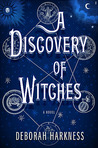
A Discovery of Witches by Deborah Harkness is the first book in the All Souls Trilogy. It weaves fantasy, history, and magic into a fascinating tale of forbidden love between a vampire and a witch. Harkness's interpretation of history with sprinkles of magic creates a story that is believable and well researched. Her detailed descriptions of events and setting adds depth to the story. Often times her descriptions of Oxford made me think I was still there. If you are a writer looking for examples of good scene and setting descriptions, this book is full of them.
There were times when I thought the characterization was flat. At first, I did not like her characters, especially Diana Bishop but, as the novel progressed, so did the characters. Their actions began to make sense, but it takes almost 500 pages into the story for that to happen. There were also times when the vocabulary used was redundant (the vampire purrs too much). Harkness spends so much time and thought on background information but does not give the same attention to the foreground. The storyline is brilliant but the story itself is slow in its pursuit of the plot.
If you love history and fantasy with a lot of time on your hands, then this book is for you.
Isabella: the Warrior Queen by Kirstin Downey is a revisionist history of Isabella of Castille. In this work, an investigation of Isabella's role as queen demonstrates a woman's aptitude in governing and the lengths taken to disguise the power of a female sovereign. Not only did Queen Isabella competently rule Castille, but she left her mark on the political landscape of European royalty and contributed to the future of the New World. Downey beautifully explained Queen Isabella's impact. Beginning with her childhood and working her way through the events of Isabella's lifetime, Downey's extensive investigation of the background and culture made the story come alive.
Downey is eloquent and thoughtful of her portrayal of Isabella, but she makes sweeping claims that make me question her sources. For example, there are frequent references to possible poisoning when someone dies during a time period when people often passed away from unknown illnesses. It might make for a more fascinating read but is not a scholarly approach, especially since there is no science to back up the claim. I also question her statements regarding the Muslim slave trade. The numbers seem rather high, especially given the time period. There had been a plague that swept through Europe, decimating the population of much of the continent. If the Muslims had captured as many slaves as claimed in Isabella, then there would not be anyone left in the cities and countryside of Europe. The Muslim invasion of the Christian world was greatly feared, but I sense some exaggeration in regards to the slave trade.
The most fascinating aspect of Isabella is the portrayal of Isabella's marriage to Ferdinand. They were the ultimate Renaissance power couple, and Downey illustrates convincingly how Isabella was the real power behind the couple. Isabella wisely manipulated her hold on the power of Castille, participated in the wars against the Muslims and squashed civil unrest, supported overseas ventures in the New World, and created alliances with the most powerful nations in Europe through marriages with her children. One of the best evidence to support her claim of Isabella's authority is how Ferdinand reigned after Isabella's death.
Isabella: the Warrior Queen is a captivating story and one I would recommend. Downey gives an absorbing and stimulating account of Queen Isabella's life and is well worth reading.
Recently I experienced my first trip to Rome, Italy. It was a whirlwind weekend of sightseeing, food, and fun. As you may know from previous blog posts, I am completely obsessed with history and mythology. Being able to see Rome firsthand was an incredible opportunity for me. After returning home and reflecting over the experience, I decided to create an interactive travel journal. While growing up, I often put together scrapbooks and journals and continued the trend in adulthood, except now I use a computer instead of construction paper. Since my conversion to Apple products, I have created an iBook for all my interest. With the variety of interactive features, I can create some memorable and entertaining books for my iPad, including my most recent addition, Weekend in Rome.
Since Weekend in Rome is a travel journal, I wrote the chapters first. Like everything else I write, I edited and proofread and let others look over the chapters until I was satisfied with the narrative. Next, I chose the pictures I wanted to use for the book. I knew this was going to be a media rich presentation with pictures and videos, so I took over a thousand pictures and forty videos while I was there. No kidding. I seriously took over a thousand pictures. Always, always take a bunch of pictures. It does take many pictures before you are able to get the really good shots. Once you are organized, then choose what format and template you are going to use for the book. At the App store on your iPad there are several apps on the market that can be used to create different kinds of books. My favorite one to use is Book Creator. There is a free version, but it is certainly worth the $4.99 to upgrade. If you want something a little more sophisticated like I did, then you can use a template from iBook Author, which has many to choose from and includes a handful that are free. The one I chose, called "Travel Book," can be found on iBook Author's website for $19.99. It was easy to use and had several different matching designs that worked great for the vision I had for this project.
As soon as I decided on which designs I wanted to use, I then copy and pasted the text into the book. After the text was in place, it was easy to insert the pictures and the videos where they enhanced the narrative. I wanted the introduction media at the beginning of the book to be memorable, fun, and short, so I used a trailer template on iMovie, using various pictures and videos from the trip that were my favorites. I also changed the setting so that when someone opens Weekend in Rome for the first time, the video will automatically begin playing. The iBooks in my library that automatically play the introduction video (and do it well) are the ones that are my favorite because the media pulls you immediately into the book and the story. It is as if your imagination is ready to be off and running. My only problem with the video is the typo I found after deleting the project from my iPad. It is a good example of how you cannot proofread enough.
I also had some .pdf documents I wanted to include in the book, so I used a .pdf widget from Bookry.com, which is a website that has many free widgets to choose from including Google maps, forms, galleries, and more. A helpful widget that can keep your iBook at a reasonable size is the YouTube widget. Adding media to an iBook can make the project huge. If that is a concern, then you should definitely upload your videos to YouTube and use the widget instead of dropping your videos into the iBook. After you choose the widget you want to use, you can personalize the widget online. When the widget is ready to be used, simply download the file to your computer and then drop it into the iBook. To make the widget more appealing, I dropped a .jpeg (in this case, it was the EF Tours logo) onto the widget in the iBook. The beauty of widgets on Bookry.com is that if I change anything in my account online, the widget in the iBook will also change once it's been updated.
Another element I wanted to include were some of the posts I made while in Rome from my favorite social networks. I enjoy using social media and I use it heavily - perhaps too heavily for the tastes of my friends and family. I think that popular social media like Facebook, Instagram, and Twitter tell the modern story of humanity, and there is something truly beautiful about first person accounts of every day lives. I took a few screen shots and dropped the pictures of the posts into the iBook and adjusted the setting on the pictures for them to go into full view when they have been clicked. The example below is a post I made to Facebook about the Pantheon:
Whenever I completed my scrapbook, I clicked on "File" along the top of the menu bar and then "Export." Then click on "iBooks" (unless you would rather download it as a .pdf or text document, but none of the interactive features will work in those formats). Since Weekend in Rome is a travel journal with private reflections, I saved the file to my computer instead of the iTunes store. If you want to make the iBook public and publish to the iTunes store, then click on the "Publish" button along the top menu and follow the instructions. Sorry, you will not be able to get your hands on this edition of Weekend in Rome, but you can easily create your own book of treasured memories. It's definitely worth the time and effort. Below is a short video preview of the finished book just to give you some ideas and a creative boost:
Hitler’s Furies is
a remarkable story of German women whose participation in the Holocaust
contributed to the deaths of millions on the Eastern Front. Wendy Lower follows
the intriguing stories of twelve women whose loyalty to Adolf Hitler and desire
for a better life propels them to commit atrocities to Jewish people.The story Lower presents is one of normal,
every day women who are products of their time. Lower beautifully demonstrates
how their background as women coming of age after the defeat of World War I and
the emergence of the Nazi party helped to cultivate them into being comfortable
with racism, which in turned created an atmosphere where there is no question
of morality when Jewish people are concerned. Lower’s research highlighted the
atrocities committed by these women using interviews and documents found in
Russian and German archives. Although some evidence has clearly been destroyed
after the war either through warfare or the purposeful destruction of
documents, Lower makes a good case against these women who got away with
murder; however, the numbers she uses are not always substantiated by the
evidence she presents in Hitler’s Furies.
For example, her claim that over a half-million women are culpable and should
be exposed and prosecuted is not convincing because of the lack of evidence.
Lower admits that the documentation is not there to substantiate this
overwhelming claim.