Showing posts with label characterization. Show all posts

Wednesday, May 27, 2015

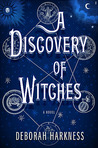
A Discovery of Witches (All Souls Trilogy, #1)A Discovery of Witches by Deborah Harkness
My rating: 3 of 5 stars

A Discovery of Witches by Deborah Harkness is the first book in the All Souls Trilogy. It weaves fantasy, history, and magic into a fascinating tale of forbidden love between a vampire and a witch. Harkness's interpretation of history with sprinkles of magic creates a story that is believable and well researched. Her detailed descriptions of events and setting adds depth to the story. Often times her descriptions of Oxford made me think I was still there. If you are a writer looking for examples of good scene and setting descriptions, this book is full of them.

There were times when I thought the characterization was flat. At first, I did not like her characters, especially Diana Bishop but, as the novel progressed, so did the characters. Their actions began to make sense, but it takes almost 500 pages into the story for that to happen. There were also times when the vocabulary used was redundant (the vampire purrs too much). Harkness spends so much time and thought on background information but does not give the same attention to the foreground. The storyline is brilliant but the story itself is slow in its pursuit of the plot.

If you love history and fantasy with a lot of time on your hands, then this book is for you.

View all my reviews

Saturday, October 4, 2014

Point of View

Lake Ouachita from the observation platform on Hickory Nut Mountain.

Point of view is the position from which we look at something and the consequences of looking at something from a particular position - the opinion, judgments, or attitudes that we form. Because of its fundamental nature, point of view affects everything a writer does. It is the key to the structure of the work and to the reader's response. The character "telling" the story is considered the viewpoint character (usually first or third person). This character's attitude will affect how the story is told and the details that are given to the audience. Put the scene in the viewpoint of the character with the most to lose. Here are a few notes I've collected over the years about viewpoint and how to use point of view to enhance your story:

Viewpoint and Emotional Intensity


First person: the story is told as if the narrator were the writer (uses "I").

Example: "I couldn't believe how hot the sun was." This is first person and gives the readers information; it also functions to show the reader how that information affects a character, but it is also the most limiting of viewpoints, because the reader only knows what one character sees, feels, hears, etc.

Third person: the story is told through the eyes of a third person who observes from inside the viewpoint character's mind.

Example: "She remembered the first time she saw the farm..." Third person frees the writer to choose a different viewpoint character for different parts of the book. Switch characters to show motivation. It is the most desired point of view in romances (uses "they," "he," "she," or "it").

"The sun felt like a warm caress on her shoulders." This point of view gives information to the reader, but it also functions to show the reader how that information affects a character.

Omnipotent: "God's" eyes, with the reader seeing into everyone's thought processes. It distances the reader from the characters.

Example: "The sun was shining." The sentence gives information to the reader, but we don't know who is speaking.

Author intrusion (or narrative point of view): sometimes the author slips personal comments into a scene: "What Amy did not know was that at that very moment Harry was sneaking into the Shady Motel with her sister, Joan." Author intrusion reminds the reader that he is reading a story. It jolts them out of the story. This should be avoided.

Example: "John couldn't know that the sun was going to shine next Tuesday." This sentence gives the reader information , but it is specifically information that the character does not know. It is the author stepping in to tell the reader what they are suppose to see, know, and think.

Guidelines for Viewpoint


  1. Limit your viewpoint characters and shifts. At any point in your story, the character through whom the reader sees the story world is the viewpoint character. You want your reader to feel these emotions deeply. To achieve this, limit your viewpoint characters to those people who are most important to the story.
  2. Limit your writing to what your viewpoint character can sense. Limit the information you give to what the character can see, hear, touch, taste, feel, and think.
  3. Avoid head-hopping. If you frequently hop back and forth from one character's thoughts to another's, the reader may lose sense of involvement with your story.
  4. Give clear signals when you change point of view. Be sure the reader know immediately when you have changed viewpoints. Give the reader a physical clue that you have changed, like chapter break, break in text, or ****. In the first sentence with the new viewpoint character give a clear clue by showing the reader something that can be seen only from the viewpoint and naming the viewpoint character.
  5. Be careful of mirrors and physical inventories. It can be challenging to find a way to detail a person's physical appearance when in that person's viewpoint. If you use a mirror, use it to show something of the character's thoughts.
  6. Through other eyes. When you show one character's observations of another, remember to be consistent with the character doing the observing.
  7. Do not get between your characters and the reader. Sneak the background information in naturally.

Point of View Checklist


  • Have I chosen the best character for this scene?Is the viewpoint absolutely clear to the reader at all times?
  • Is the viewpoint logical? Is my character seeing and hearing things that are physically impossible?
  • Is my viewpoint character a mind reader? Knows what another character is thinking or feeling.
  • Is my viewpoint character a narcissist? Thinking about her own long, flowing blond hair, perky breasts, or slim figure?
  • Does each character express him/herself in thought and dialogue in a way that is consistent with his/her frame of reference? (A cowboy, a doctor, and a movie star should view and describe the same experience in different terms).
  • Did I change POV during this scene? How many times? Why?
  • Do my descriptions and narrative section reflect my viewpoint character's personality and frame of reference?
  • If I switch this scene from third person into first person does this character still sound like him/herself?

Author's Voice


Tips for developing your author's voice:

  1. Read books by authors you like. Study their style, voice, etc.
  2. Avoid authors who's style is no where close to your own while developing your voice.
  3. Develop opinions about what is good writing.
  4. Write regularly and often.
  5. Read your work out loud.
  6. Care about your story and characters. Be involved with them.

Saturday, March 8, 2014

The Back Story: A Character's Biography

Characters are the heartbeat of our stories but, for most of us, it takes some work for our heroes and heroines to become fully formed. The key is to create them with a past logical enough to make the story believable. The character interview is one way to become familiar with your characters and their back story (or their biography). The character interview is an old idea but an effective one. The purpose is to become the character in an attempt to figure him/her out.

The Interview

  1. Make a list of possible questions to ask your character, leaving room for spontaneous questions as well.
  2. Ask a friend to be your interviewer. If you have a friend who is a writer, ask that person because they are more sympathetic to what you are trying to do. There is a good chance that if your friend is a writer, they won't give you that look. You know that look I'm talking about. The one you get every time you talk to someone about your writing who is not a writer. Yeah, I get that look too often.
  3. If possible, record the interview - this will leave you free to think about the character instead of taking notes. When you review the recording later, make your character notes then. Do not be afraid to collaborate with your interviewer later. They might have some insight that you missed.
  4. Answer all of the questions in the first person.

Sample Questions
  • Where and when were you born?
  • Who are your parents? 
  • Was your family rich, poor, or middle class? How did this affect you?
  • Which parent were you closest to? What is your relationship today?
  • Do you have any brothers or sisters? How many? Tell me about them. What is your relationship today?
  • What is your educational background? 
  • Did you like school? Why or why not?
  • What skills and hobbies do you have?
  • What is your religion? How does this effect your perception of the world around you?
  • Did you have a pet? What kind of pet? What was their name(s)?
  • Who were your lovers? What happened with them?
  • Have you ever been married? What happened?
  • What do you consider your best physical feature?
  • What do you care about most?
  • What are some key turning points in your life?
  • What are your goals for the future?

Refer back to your notes and the answers as you create your story. You will find them helpful when keeping your character on track.

Sunday, March 2, 2014

Making Believable Characters


Making believable characters will drive a story line. To make your characters more believable you should continuously observe your life and the lives of others. You have to be curious about people and how they think and use this information to make three-dimensional characters. Be honest, study reactions, and make notes of emotional and physical reactions. Keep a note pad with you (or use a note app on your phone) and jot down interesting characters you see in the mall, at the store, on your way to work, at work, airports, etc. Make a note of their characteristics (physical, mental, emotional, etc.) and make notes of the phrases they use and their mannerisms. 

Before you begin to write your story, make notes on your characters. Give them a back story or do a character interview and answer questions like: 

What do they say about themselves? 
What do others say about them? 
What do they look like (clothes, speech patterns, etc.)? 
What is their history? 
What was their childhood like? 
Who molded their character. 
What is the character’s present life? 

You want to give them a personality, abilities and disabilities, history, hang-ups, goals; relationships to career, house, city, weather, traffic, etc. You may also want to give them past and present relationships with friends, family, lovers, pets. The more you develop your character, the more real they will become.

As you write your story, be willing to take your characters to the extreme and bring them back again. If there is no conflict, there can be no development or growth in a character. Your main characters should be well developed. The minor characters can be flat and static. Your characters will bring your story alive and drive the plot so let them do the writing. Do not have your characters behave and react contrary to the personality and history you have given them unless they are suppose to grow. Everything that happens in your fiction should involve some aspect of your characters. Do not force your plot on to your characters. Let them come alive. Let them decide the turns the plot should make and make sure that every action comes directly from that character’s personality.

A book that I review when creating characters is called The Complete Writer's Guide to Heroes and Heroines: Sixteen Master Archetypes by Tami D. Cowden, Caro LaFever, and Sue Viders. This is perhaps the most useful book I have found about using archetypes when creating characters, and I highly recommend it. This book describes the common male and female archetypes found in literature. When creating your characters, you want to layer them and not just pick one archetype. If you layer your character, it gives you more options and the character more depth.


My current project is a time slip novel called Irresistible Forces. For my main characters, I filled out a "Character Analysis" worksheet. I describe as much of the character as in-depth as possible, including physical appearance, personality traits, and a back story. Since I am a visual person, I also find a picture that closely resembles the description. I find that this keeps me focused visually, which helps when I am describing the character in the story. Below is a link to a blank .pdf copy of the "Character Analysis" worksheet that can be downloaded. Feel free to print it off or save the paper and fill out the worksheet on your computer or device. I have also included three character analysis of the most interesting characters in Irresistible Forces as an example (and to wet your appetite for the finished novel). Keep in mind while you are reading the examples that they are notes, so do not expect perfect grammar but do expect occasional randomness.


Character Analysis Worksheet

Examples from Irresistible Forces:

The Ruby and the Lovers's Tale

Rhiamon


Cane the Savage


For more information about my current projects, please visit my website.

Sunday, January 12, 2014

Development of Fiction


Writing is an art that takes years to develop. There are some writers who are naturally able to understand the correct uses of grammar but, for the rest of us, it takes time, patience, and practice. I can't make you a great writer, but I can tell you my philosophy and approach to the writing profession. In order to write good fiction, you not only have to have a story to tell, but you will need to understand the different components to writing good fiction. All good fiction must have a theme, an appropriate setting, a clear plot, and believable characters. You want to be logical about your story or it will not be taken seriously. There must also be an appropriate tone and style to the writing with an appointed time frame within the story - and these vary depending on what genre you are writing, so do some background research on the genre you plan to write your story. You want to use language and vocabulary that compliment the story. You should use good descriptions and interesting dialogue between characters. Dialogue should always have a purpose and should get to the point. Readers will lose interest in a story if the dialogue is unrealistic or bores them. Above all, you must have good writing. 

When you are writing, remember that you are writing for your reader. They are both fascinated and threatened by significant change. They want the story to start with a change. The reader wants to have a story question to worry about, and they want the story question answered in the story ending. Readers will quickly lose patience with everything but material relating to the story.

A Game Plan: Starting and Ending


  • Look for and identify, in terms of days, weeks, or months, that briefer period of time when the story happens.
  • Think hard about your major character(s) and what makes them tick. Define his/her outlook on the world, themselves, and other characters. Create a biography of your character (more about characterization in a later blog). Remember, the character has to struggle or they will not make good lead characters.
  • Create a dramatic situation or event, which will present your character with a moment of change.
  • Plan your plot so that your story will open with this event.
  • What is the story question? Decide what the goal for your most significant character will be in order to fix or answer the story question.
  • Devise a plan for your character as they make their journey through the story. Before you write, you should have a good idea of where the story is going and how the story will end.
  • Figure out the where and how the story question will finally be answered.
  • Plan to make the start and end as close together in time as you can.

Sunday, December 22, 2013

Writing Fiction: An Introduction


Picture from publicdomainreview.org 
Fiction is any literary work that is invented using the imagination instead of factual events. It includes novels, short stories, plays, and literature. Some fiction, like historical fiction, has some background in fact, but the overall story is imaginary.

Elements of Fiction


Plot: the interaction within a story.

Setting: where the story takes place (time, location).

Character: the people, animals, or things in a story, including the protagonist (hero), the antagonist (villain), and supporting characters.

Conflict: the struggle between two opposing forces.

Point of View: the perspective in which the story is being told.

Theme: the main idea of a story.

Symbolism: the representation of an idea or a concept.

Cause and Effect: the logical pattern of action in a story.

Show versus tell: describing the story instead of telling a sequence of events.